Best Keyword Clustering Tools for SEO in 2026
Keyword clustering tools take a raw list of keywords and group them into topics, so you know which keywords belong on the same page. Some tools do this by analyzing Google search results (SERP-based clustering), checking which keywords return the same URLs. Others use AI and natural language processing to group keywords by semantic meaning, understanding that "best running shoes" and "top rated sneakers" target the same intent even if the words are different.
Either approach beats sorting keywords by hand in a spreadsheet. If you are looking specifically for a free keyword grouper, we cover that below. The difference comes down to accuracy, speed, and what you get alongside the clusters. Some keyword clustering tools include search volume and CPC. Some generate content briefs. Some are free. Most are not.
We tested 11 keyword clustering tools to help you find the right fit. This list covers SERP-based tools, semantic AI tools, free keyword clustering tools, and paid platforms. For each one, you will find the approach it uses, what it costs, what is included, and an honest take on where it works best. New to the concept? See keyword clustering examples first.
Quick Comparison: All 11 Tools at a Glance
| Tool | Approach | Starting Price | Free Tier | Includes Metrics | Best For |
|---|---|---|---|---|---|
| Keyword Insights | SERP-based | $58/mo | Agencies needing intent classification | ||
| SE Ranking Keyword Grouper | SERP-based | $52/mo+ | Users already on SE Ranking | ||
| KeyClusters | SERP-based | ~$5/1K kw | One-off clustering without a subscription | ||
| Semrush Keyword Strategy Builder | AI + SERP hybrid | $140/mo | Enterprise teams already using Semrush | ||
| Serpstat | SERP-based | $59/mo | Budget-conscious teams wanting an all-in-one SEO suite | ||
| Keyword Cupid | Neural network + SERP | $50/mo | Visual thinkers who want cluster dendrograms | ||
| thruuu | SERP-based | Free / $19/mo | Content writers who also need SERP analysis | ||
| KeywordsPeopleUse | SERP-based | Free / $15/mo | Keyword research with built-in clustering | ||
| WriterZen | Semantic | $75 once | Content teams wanting a one-time purchase | ||
| Zenbrief | NLP/BERT semantic | Free | Quick NLP-based clustering without signup hassles | ||
| Keyword Clustering Ours | Semantic AI | Free | Keywords Everywhere users who want free clustering with metrics |
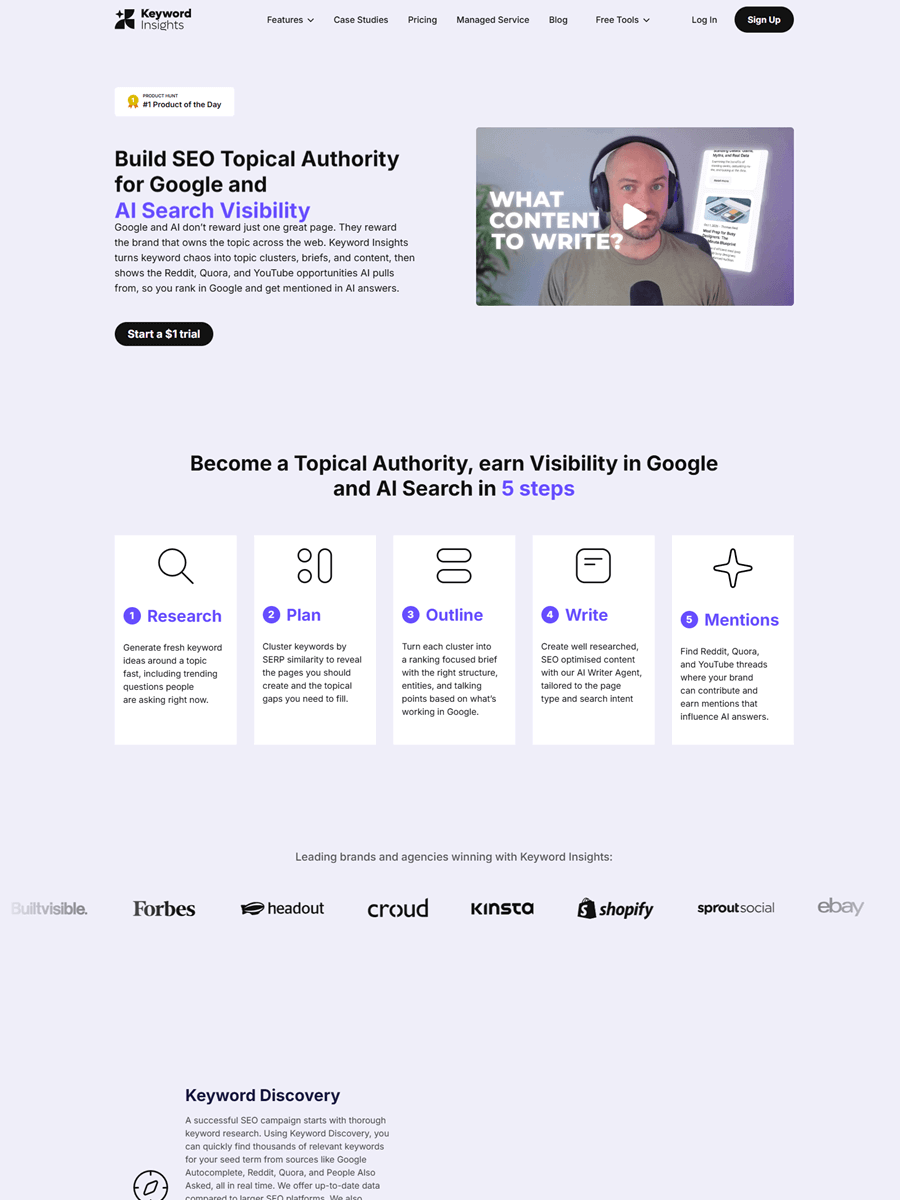
1. Keyword Insights
Keyword Insights is one of the most established keyword clustering tools on the market. It groups keywords by analyzing actual Google search results, checking which keywords return similar URLs. On top of clustering, it classifies search intent (informational, transactional, etc.) and generates content briefs. The platform is designed for teams that need clustering at scale with detailed reporting.
Key Features
- SERP-based clustering with live Google data
- Automatic search intent classification per keyword
- Content brief generation from clusters
- Bulk processing for large keyword sets
- Team collaboration features
Pros
- Highly accurate SERP overlap clustering
- Intent classification saves a separate analysis step
- Content briefs are useful for writers
Cons
- Starts at $58/month with credit limits
- Credits run out fast on large projects
- Learning curve for new users
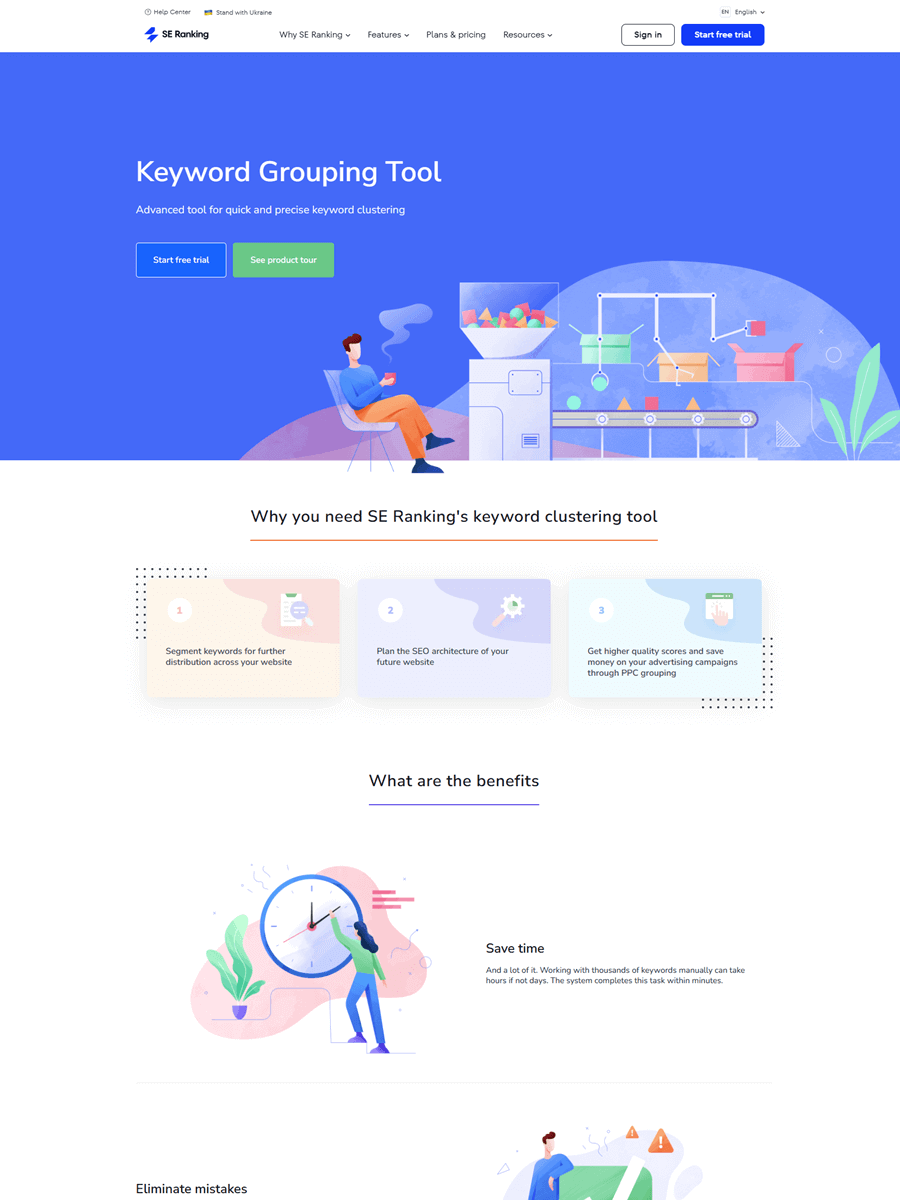
2. SE Ranking Keyword Grouper
SE Ranking includes a keyword grouper as part of its all-in-one SEO platform. It clusters keywords by checking SERP overlap, grouping keywords that share top-ranking URLs. Since it sits inside a full SEO suite, you also get rank tracking, site auditing, and competitor analysis in the same subscription. The grouper works well but is not available as a standalone tool.
Key Features
- SERP overlap analysis for grouping
- Adjustable clustering threshold (1 to 10 matching URLs)
- Integrated with rank tracking and site audit
- Keyword difficulty and volume included
- Bulk keyword import
Pros
- Part of a complete SEO toolkit
- Flexible threshold settings for tighter or looser clusters
- Good keyword metrics built in
Cons
- Must subscribe to the full platform to use the grouper
- Minimum $52/month even if you only need clustering
- Per-query charges on top of the base plan
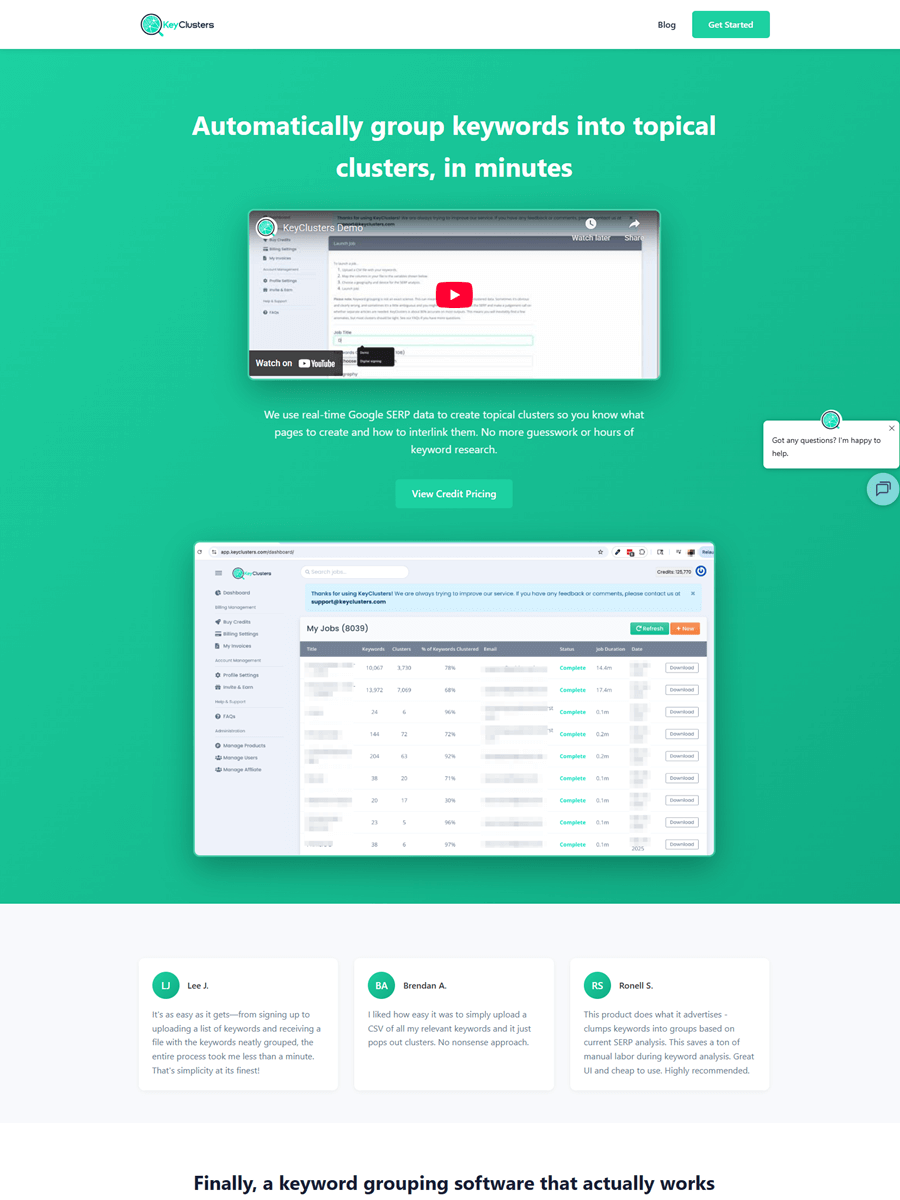
3. KeyClusters
KeyClusters takes a pay-as-you-go approach to keyword clustering. Instead of a monthly subscription, you buy credits and pay per keyword. It groups keywords by analyzing Google SERP overlap, similar to other SERP-based tools, but the pricing model makes it accessible for people who only cluster occasionally. No monthly commitment, no wasted subscription months.
Key Features
- Pay-as-you-go pricing (no subscription required)
- SERP overlap clustering with adjustable settings
- Supports large keyword lists
- Results available for download
- Simple, focused interface
Pros
- No monthly fee, pay only when you cluster
- Good for infrequent clustering needs
- Straightforward, no-frills interface
Cons
- No built-in search volume or CPC metrics
- Cost adds up at scale ($50 for 10K keywords)
- Limited features beyond basic clustering
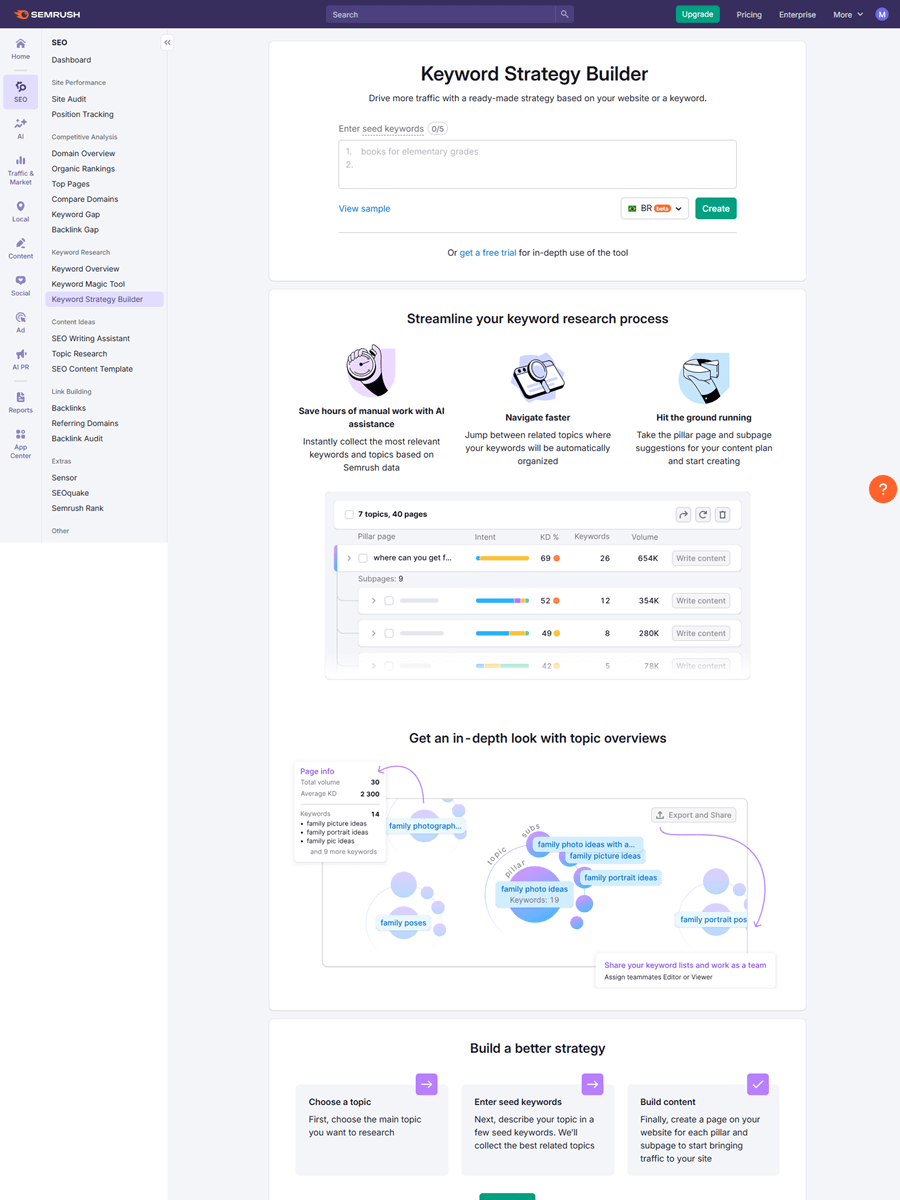
4. Semrush Keyword Strategy Builder
Semrush added a Keyword Strategy Builder to its Guru and Business plans. It combines SERP data with AI to cluster keywords into topical groups and suggest content pillars. As part of the broader Semrush ecosystem, it connects to their massive keyword database and integrates with content planning tools. The clustering is solid, but it requires the $140/month Guru plan at minimum.
Key Features
- Hybrid AI and SERP-based clustering
- Topical pillar and subpage recommendations
- Access to Semrush keyword database (26B+ keywords)
- Integration with Semrush content and SEO tools
- Visual topic cluster maps
Pros
- Massive keyword database for metrics and suggestions
- Pillar/cluster content strategy built in
- Trusted platform with years of SEO data
Cons
- Requires Guru plan at $140/month minimum
- Expensive if you only need clustering
- Complex interface with a learning curve
5. Serpstat
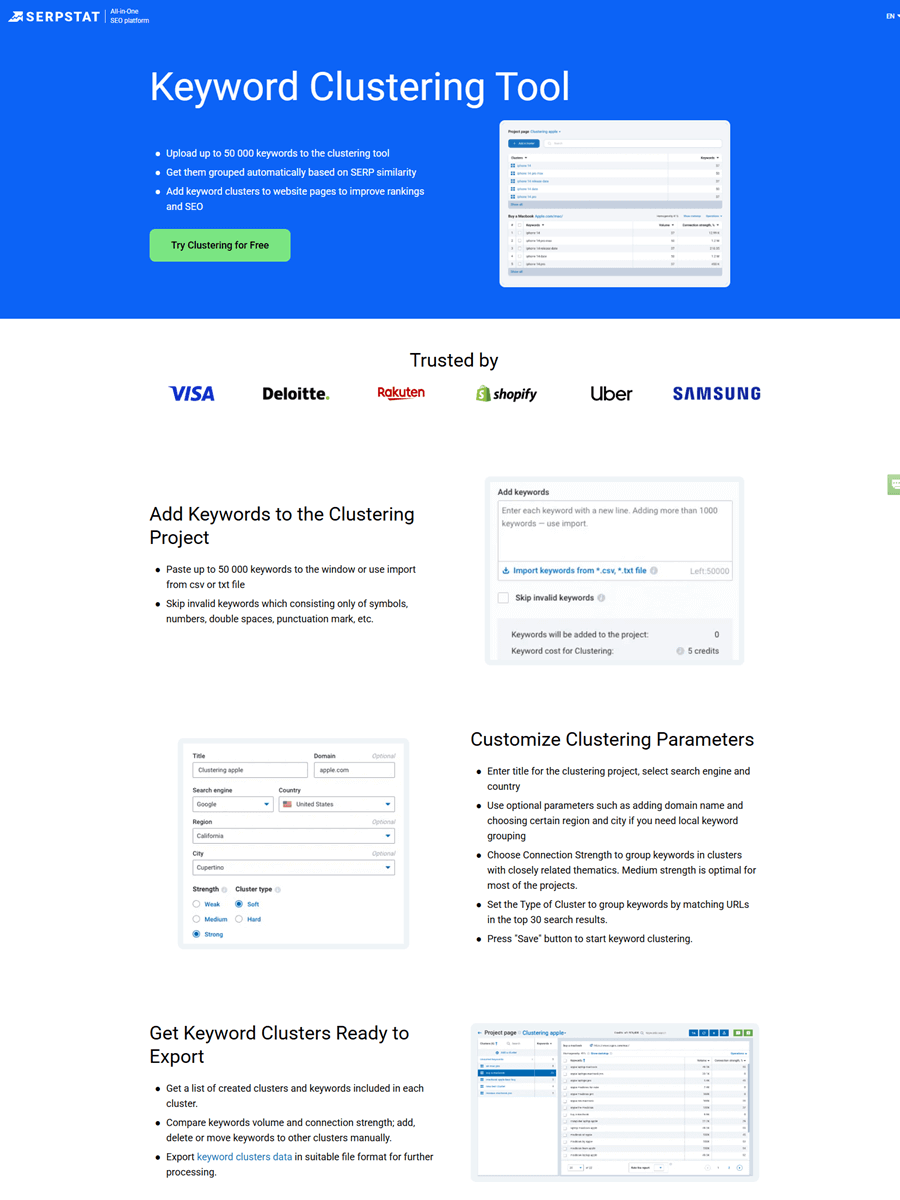
Serpstat includes a keyword clustering feature in its SEO platform. It analyzes SERP results to group keywords that compete for the same positions. The tool also provides keyword difficulty, search volume, and competitive analysis. Like SE Ranking, it is part of a broader platform, so you get clustering alongside other SEO features.
Key Features
- SERP-based keyword grouping
- Keyword difficulty and volume data
- Competitor keyword gap analysis
- Site audit and rank tracking included
- API access for automation
Pros
- Full SEO suite at a competitive price
- Good keyword metrics included
- API available for programmatic access
Cons
- $59/month minimum, even for occasional clustering
- Clustering is not the primary focus of the platform
- Results can vary with smaller keyword sets
6. Keyword Cupid
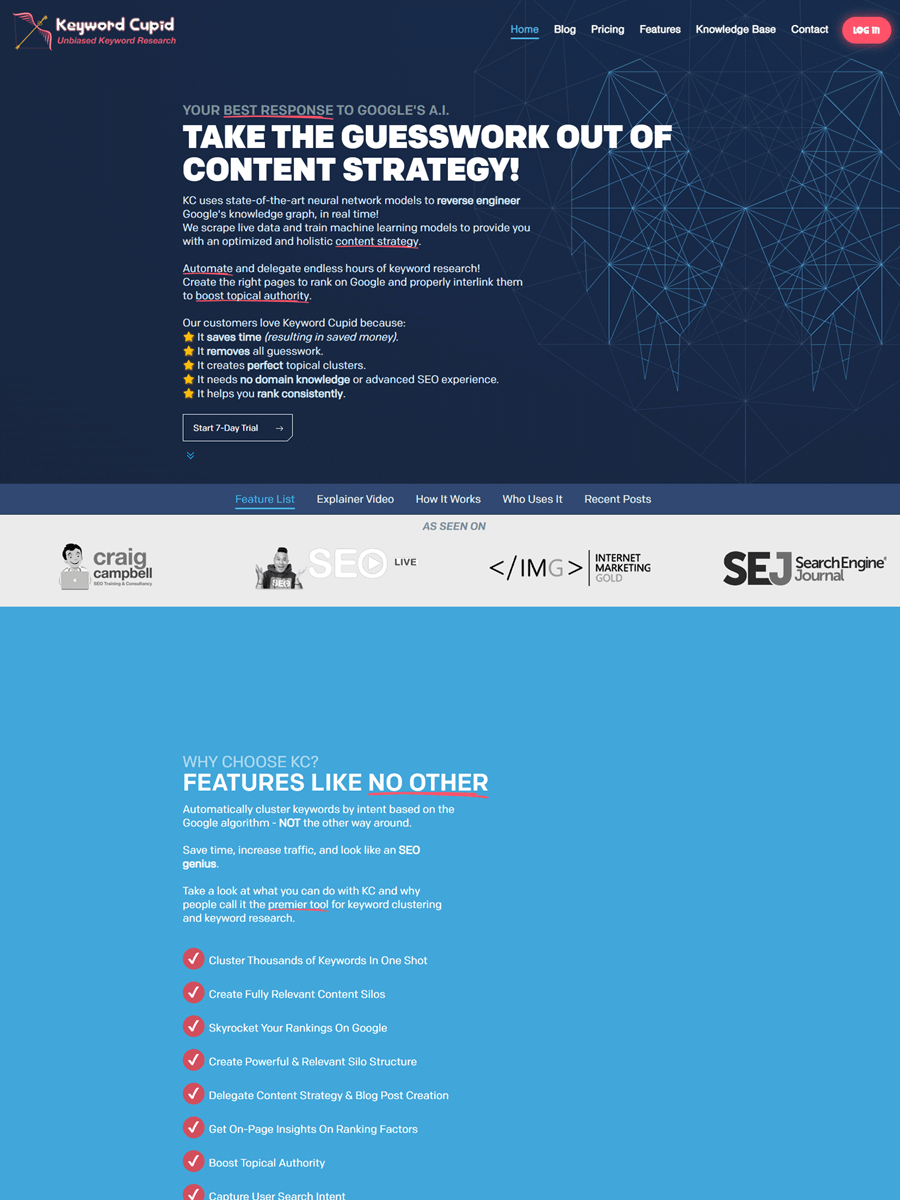
Keyword Cupid uses a combination of neural network analysis and SERP data to cluster keywords. Its standout feature is the dendrogram visualization that shows how clusters relate to each other hierarchically. You can adjust the "zoom" level to see broader or more granular groupings. The visual approach makes it easier to understand topic relationships at a glance.
Key Features
- Neural network combined with SERP analysis
- Interactive dendrogram cluster visualization
- Adjustable cluster granularity (zoom in/out)
- Hierarchical topic structure
- Export to CSV
Pros
- Unique dendrogram visualization is genuinely useful
- Flexible granularity control
- Good accuracy from the hybrid approach
Cons
- No built-in search volume or CPC data
- $49.99/month for a focused clustering tool
- Interface can feel overwhelming at first
7. thruuu
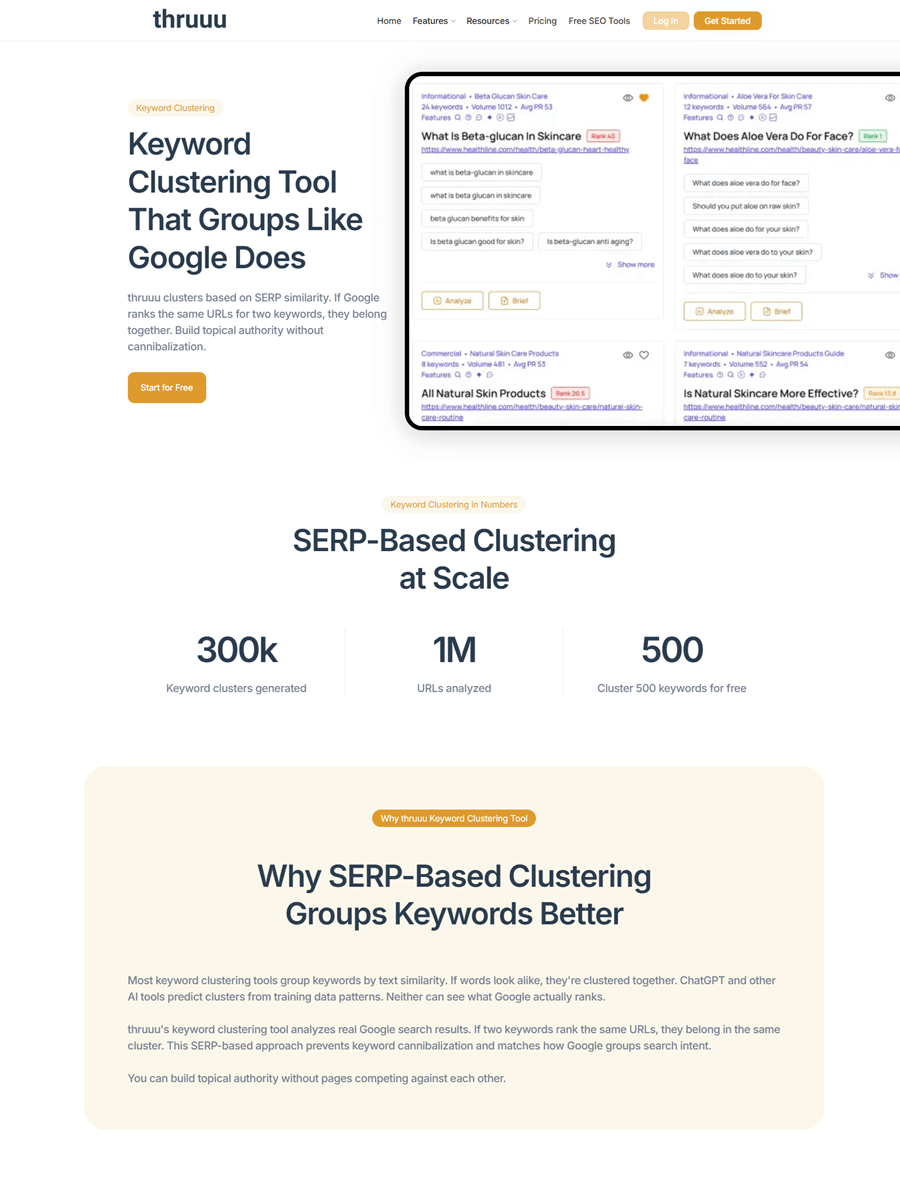
thruuu is primarily a SERP analysis and content optimization tool that includes keyword clustering. It analyzes Google search results to group keywords by SERP similarity. The free plan lets you cluster up to 500 keywords, which is enough for smaller projects. The paid plan unlocks higher limits and additional SERP analysis features like content outlines and people-also-ask extraction.
Key Features
- SERP-based keyword clustering
- Free tier with 500 keyword limit
- SERP analysis and content outline generation
- People Also Ask extraction
- Content brief builder
Pros
- Free tier available for small projects
- Affordable paid plan at $19/month
- Content optimization tools included
Cons
- Free tier limited to 500 keywords
- No search volume or CPC metrics included
- Clustering is secondary to the SERP analysis focus
8. KeywordsPeopleUse
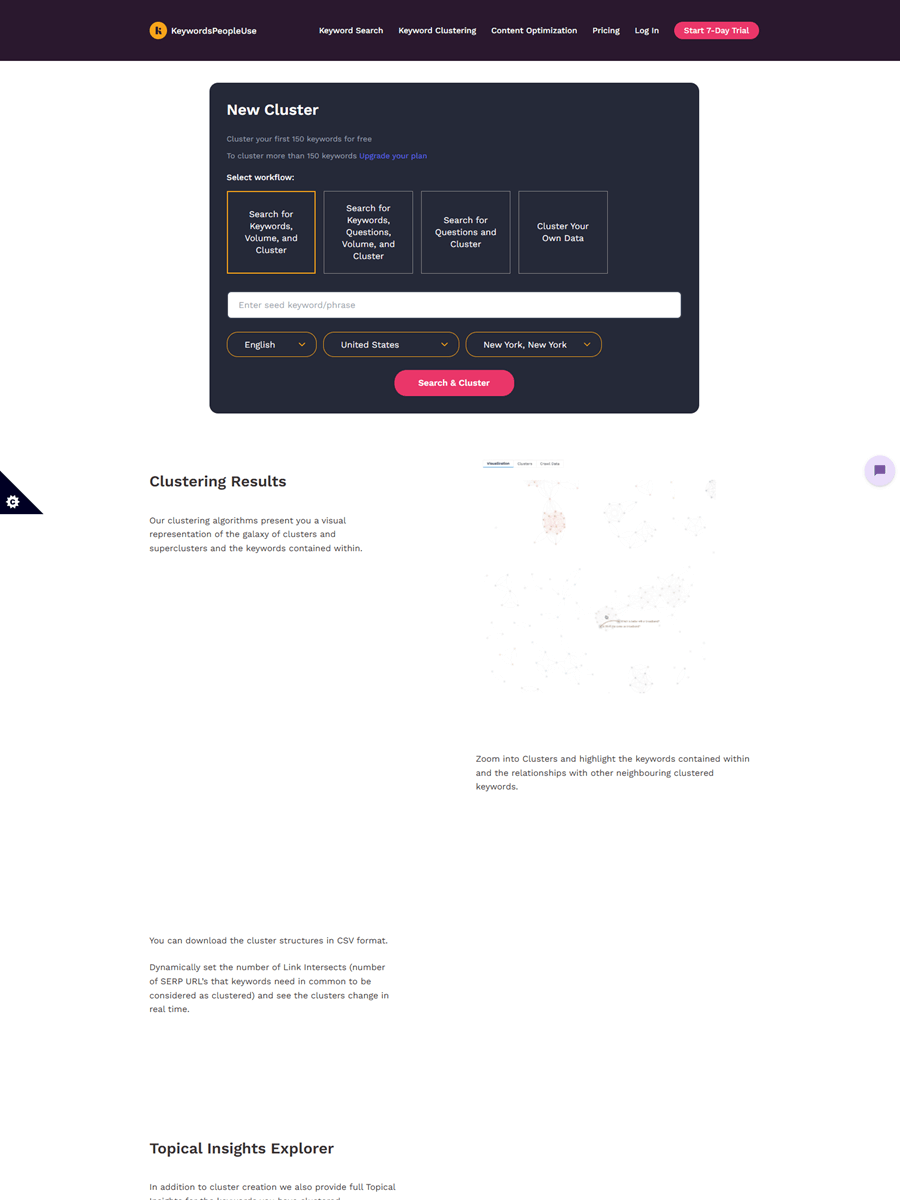
KeywordsPeopleUse combines keyword research with clustering. It pulls keyword suggestions from Google autocomplete, People Also Ask, and related searches, then groups them by SERP overlap. The free plan includes basic clustering for up to 500 keywords. The paid plan adds higher limits and more research features. It is a good starting point for keyword discovery and grouping in one place.
Key Features
- Keyword research and clustering in one tool
- Google autocomplete and PAA data
- SERP overlap grouping
- Free tier with 500 keyword clustering limit
- Content angle suggestions
Pros
- Combines research and clustering
- Free tier available
- Very affordable paid plan at $15/month
Cons
- Free plan is limited to 500 keywords
- No search volume or CPC data included
- Clustering accuracy varies with niche keywords
9. WriterZen
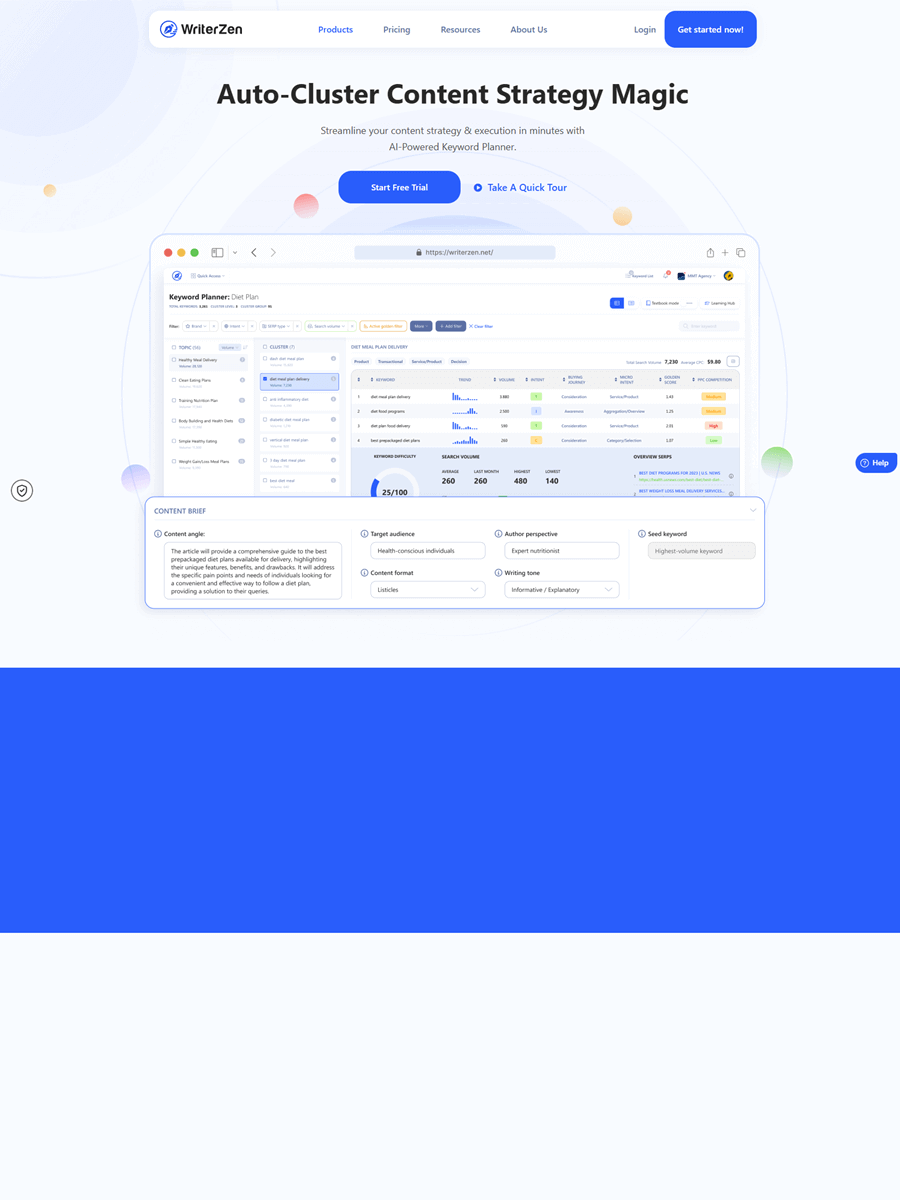
WriterZen takes a semantic approach to keyword clustering, grouping keywords by meaning rather than SERP overlap. It stands out with its one-time pricing model (lifetime deals are sometimes available), avoiding the monthly subscription trap. The platform also includes a keyword explorer, content planner, and AI writing assistant. Clustering is one piece of a broader content workflow.
Key Features
- Semantic keyword clustering
- One-time pricing option (no recurring fees)
- Keyword explorer with volume and difficulty
- Content planner and topic discovery
- AI writing assistant included
Pros
- One-time purchase avoids ongoing costs
- Semantic clustering captures meaning well
- Full content workflow from research to writing
Cons
- $75 upfront cost (higher plans for more credits)
- Credit-based system limits usage
- Interface can feel cluttered with features
10. Zenbrief
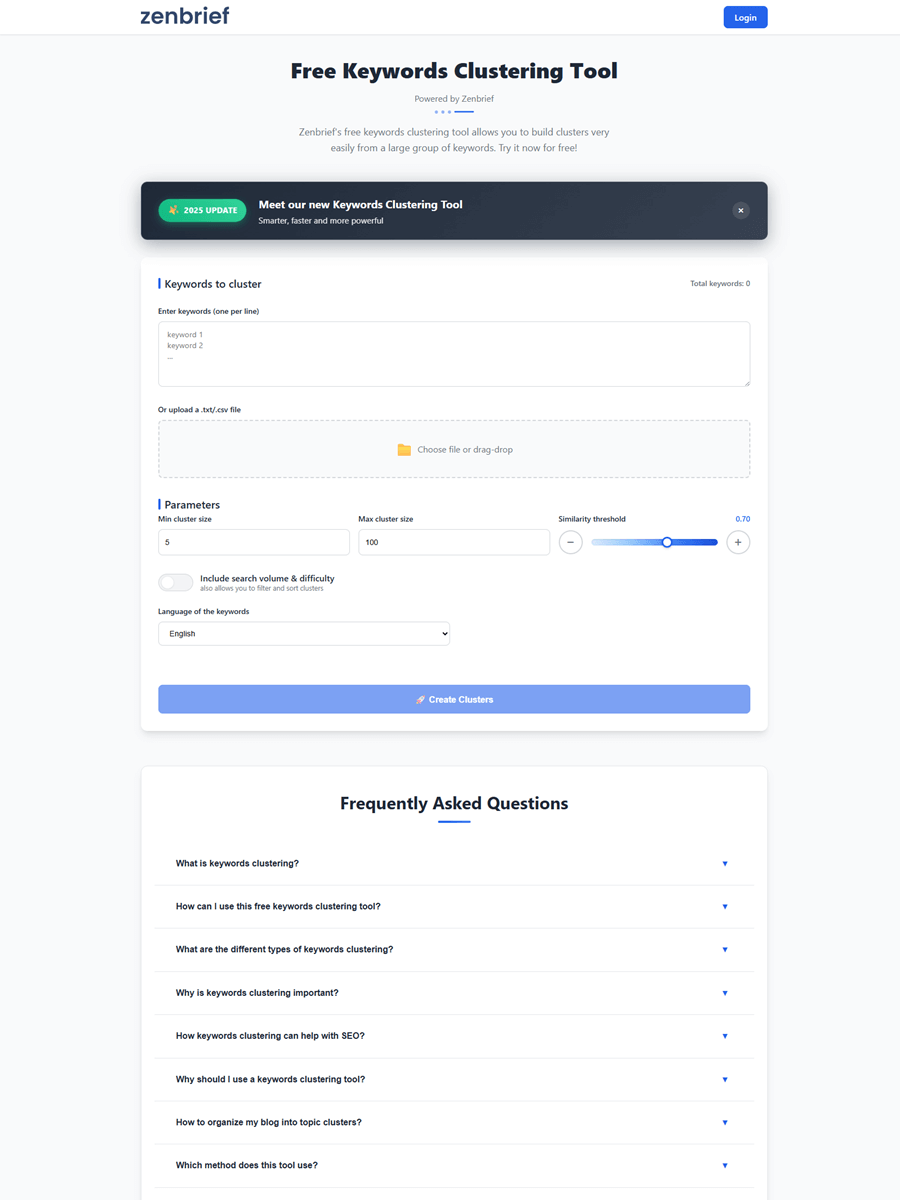
Zenbrief uses NLP and BERT-based language models to cluster keywords by semantic similarity. It is free to use and focuses purely on the clustering task without extra bells and whistles. You paste your keywords, it groups them by meaning. The simplicity is both its strength and its limitation, as there are no metrics, no export features, and no persistent storage.
Key Features
- NLP/BERT-based semantic clustering
- Free to use with no account required
- Simple paste-and-cluster interface
- Fast processing for small to medium lists
Pros
- Completely free with no signup
- NLP approach captures semantic relationships well
- Dead simple to use
Cons
- No search volume, CPC, or any metrics
- No export functionality
- No history or saved results
- Limited to smaller keyword sets
11. Keyword Clustering Our Tool
Keyword Clustering is a free semantic clustering tool built for Keywords Everywhere users. It uses GPT-powered AI to group keywords by meaning and search intent, then automatically attaches search volume and CPC from Keywords Everywhere on every keyword. You can paste, upload a file, or import from your KE Favorites. Results include named clusters, aggregate metrics, page suggestions, and export to CSV or Excel. There is no subscription, no credit system, and no premium tier.
Key Features
- Free semantic AI clustering (GPT-powered)
- Automatic search volume and CPC from Keywords Everywhere
- Paste, file upload (CSV/TXT/Excel), or KE Favorites import
- Up to 10,000 keywords per job
- Named clusters with aggregate metrics
- Page suggestions with SERP preview for each cluster
- CSV and Excel export
- Shareable links with expiry (24h, 7d, 30d)
- Full job history for one year
Pros
- Completely free with no credit limits or premium tiers
- Search volume and CPC included automatically
- Handles up to 10,000 keywords per job
- AI generates cluster names and page suggestions
- Export and sharing built in
Cons
- Requires a Keywords Everywhere API key (free to get)
- Semantic only (no SERP overlap analysis)
- English language keywords only
How We Evaluated These Tools
We tested each tool with the same set of 2,000 keywords across three niches (e-commerce, SaaS, and local services). We evaluated clustering approach and accuracy, pricing structure and value, whether search metrics are included or require external lookups, ease of use from keyword input to usable output, and export and sharing capabilities. Every tool was used as a regular user would, not through demos or sales walkthroughs.
Which Keyword Clustering Tool Should You Use?
If you need SERP-based clustering and have the budget: Keyword Insights gives you the most complete SERP overlap analysis with intent classification. SE Ranking and Serpstat are good alternatives if you want clustering inside a full SEO suite.
If you cluster occasionally and do not want a subscription: KeyClusters lets you pay per job. WriterZen offers a one-time purchase option.
If you want visual cluster mapping: Keyword Cupid's dendrogram is the most interesting visualization on this list.
If you want free keyword clustering tools: Zenbrief, thruuu, and KeywordsPeopleUse all offer free tiers, but none include search metrics. Keyword Clustering is the only free tool that attaches search volume and CPC automatically.
If you use Keywords Everywhere: Keyword Clustering was built specifically for KE users. Free semantic AI clustering, automatic metrics from KE, up to 10,000 keywords per job, and export/sharing included. No subscription, no credit system.